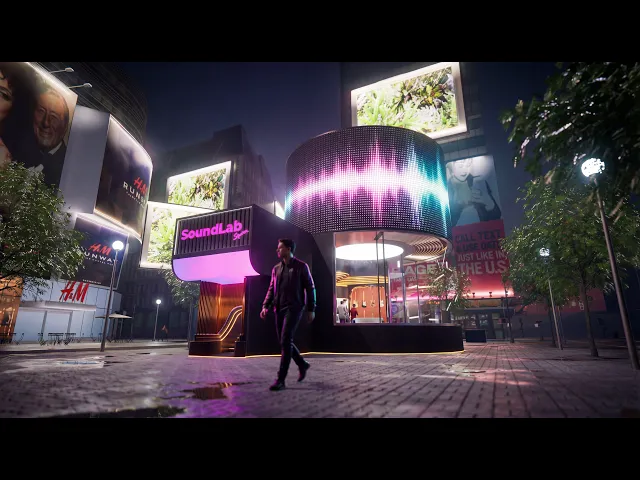
SoundLab explores how spatial design can reduce the fear of starting something new. Inspired by my own experience learning guitar, the project began with a simple observation: many people are inspired to play music, yet taking the first step often feels intimidating. While aspiring musicians are surrounded by opportunities to watch, listen, and admire, finding a comfortable way to begin remains a challenge. Drawing from the beginner-friendly philosophy of the Squier Stratocaster, SoundLab deconstructs the guitar into three interactive experiences centred around touch, sound, and expression. Together, these experiences guide visitors from imitation to aspiration and ultimately confidence, transforming the journey from observer to performer into an intuitive and engaging experience. SUPERVISED BY TAN SIXIU FOR THE SPATIALIZING EMOTION IN RETAIL DESIGN PLATFORM.
Client
(Concept)
Team members
LEE KAIEN, ZANE & DANIKH NIZAM
Year
2026
Figma, Twinmotion, Rhino, p5.js
Design Brief:
For this design platform, students were tasked with decoding the emotional qualities of a consumer product and translating them into an immersive retail experience. Moving beyond traditional product-centred retail, the project explored how sound, touch, smell, materiality, and atmosphere could be orchestrated to create spaces that embody the feeling of an object rather than simply display it.
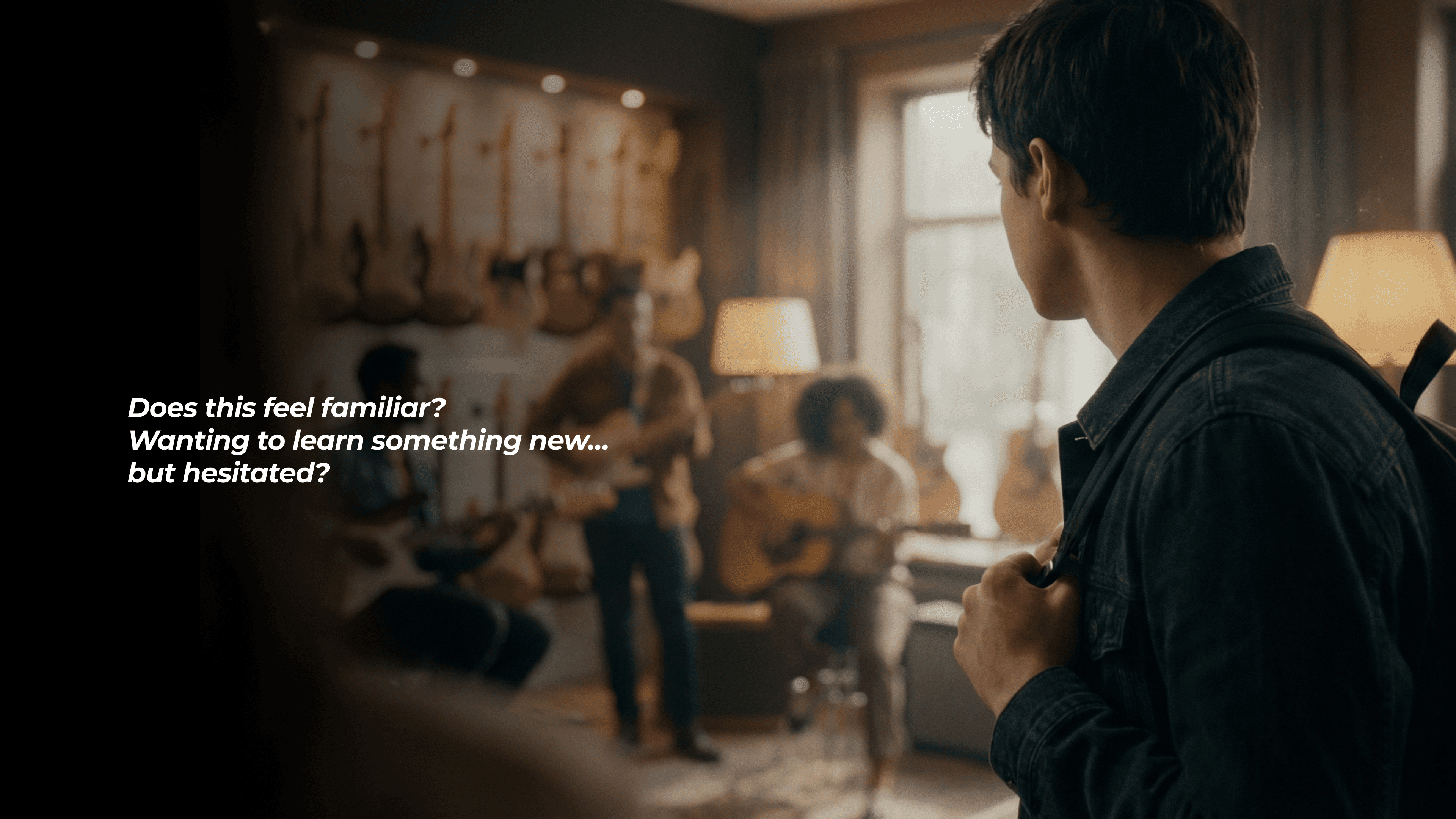
We've all wanted to learn something new. Taking that first step, however, can feel surprisingly difficult. Surrounded by people who seem more experienced, it's easy to question whether you're ready to begin.

The first stage is imitation. Learning often starts not with understanding, but with the desire to copy. Before I knew how to play guitar, I watched my older brother and imagined myself doing the same, chasing the feeling behind every note long before I understood how to create it.
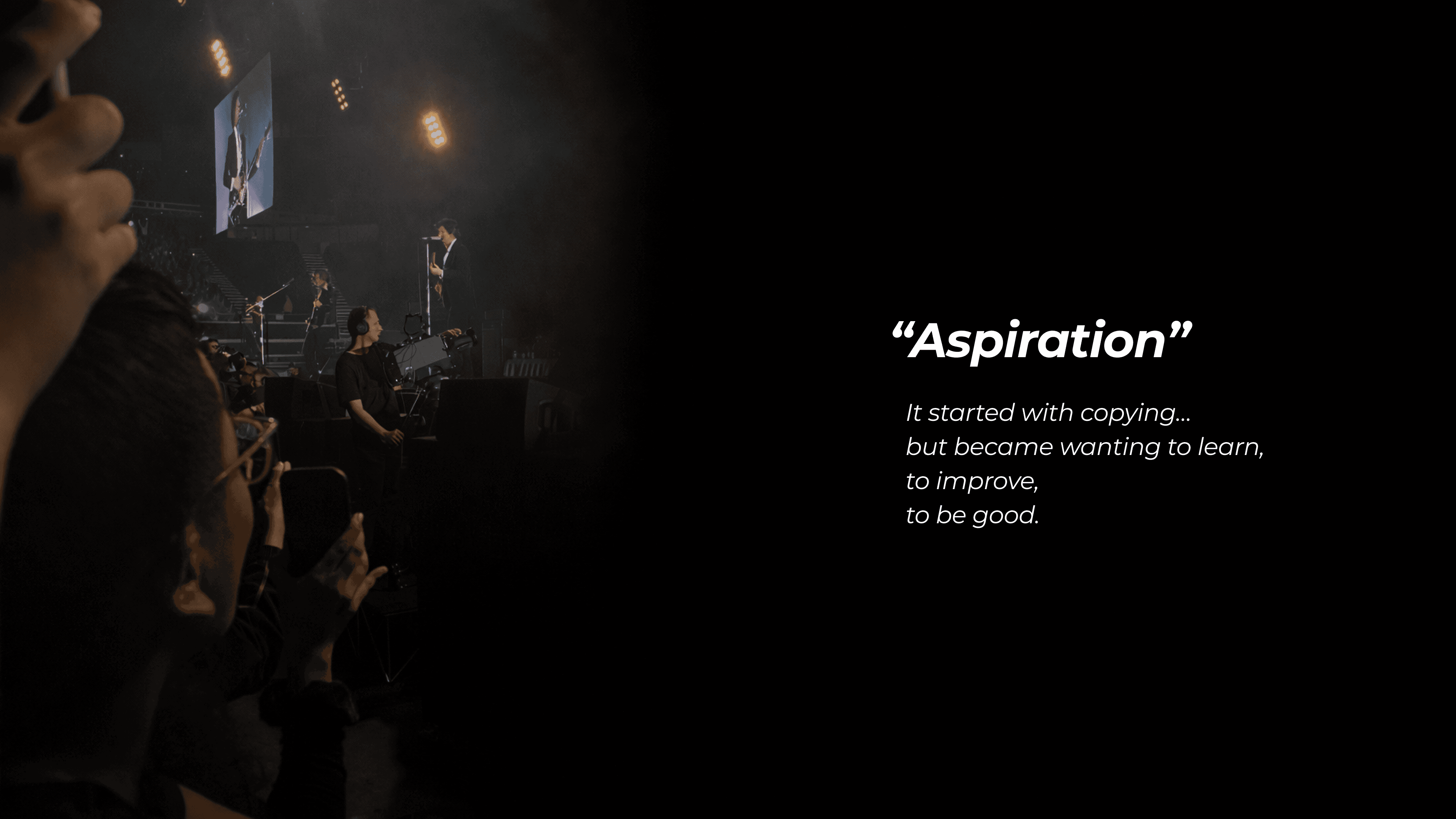
Imitation gradually becomes aspiration. What begins as a desire to copy evolves into a desire to learn, improve, and express something of your own. The more I watched musicians I admired, the more I wanted to step beyond observation and become a participant myself.
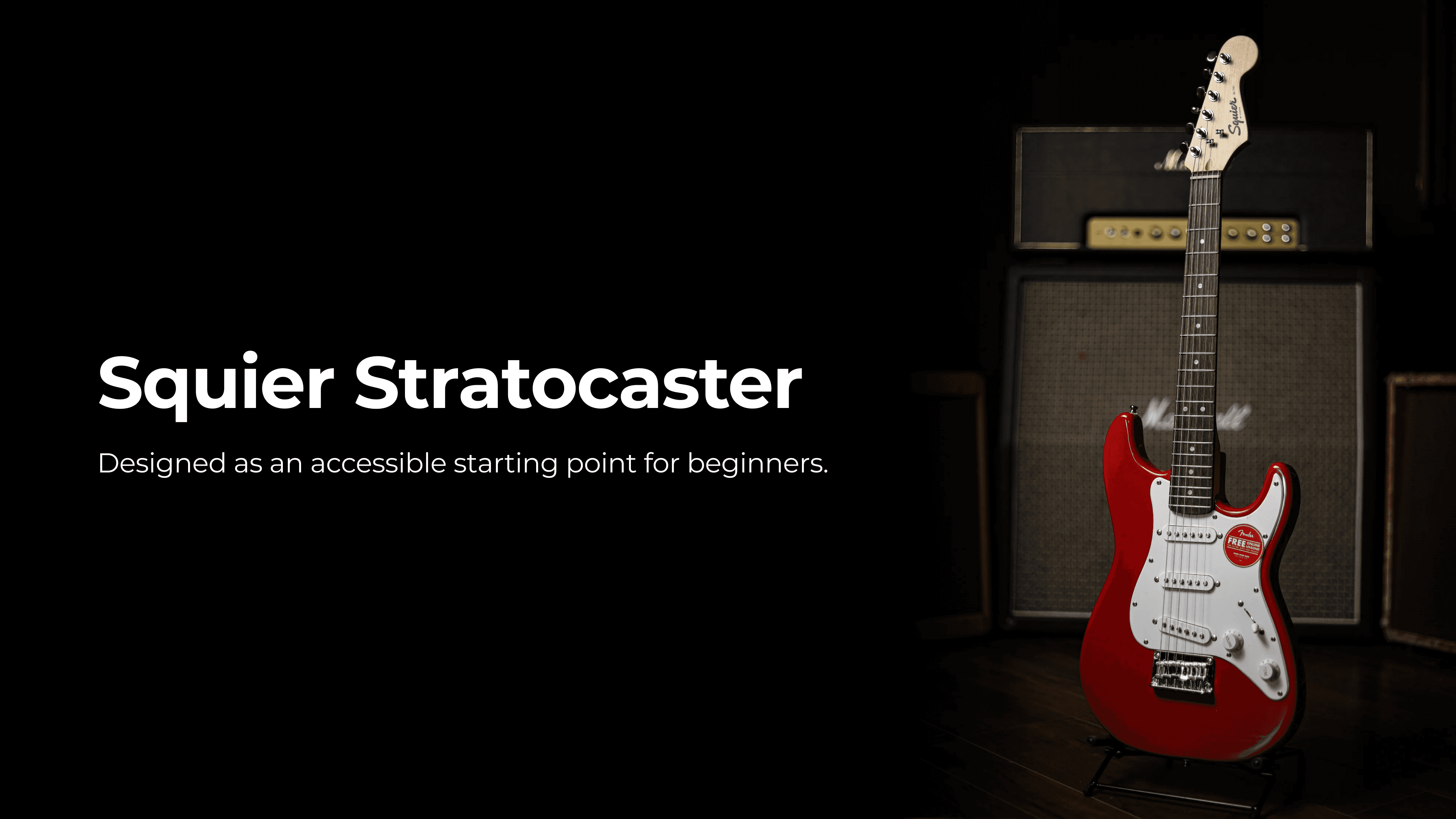
The challenge was no longer wanting to play, but finding a place to start. For me, that starting point was the Squier Stratocaster, a guitar built with beginners in mind.

My older brother inspired the desire to learn. The Squier Stratocaster provided the means to begin. As Fender's beginner-oriented line of instruments, Squier's focus on accessibility became the starting point for translating the experience of learning music into a spatial journey.

Standing on stage felt impossible when I first picked up a guitar. Looking back, the biggest challenge was never performing. It was finding the confidence to begin.


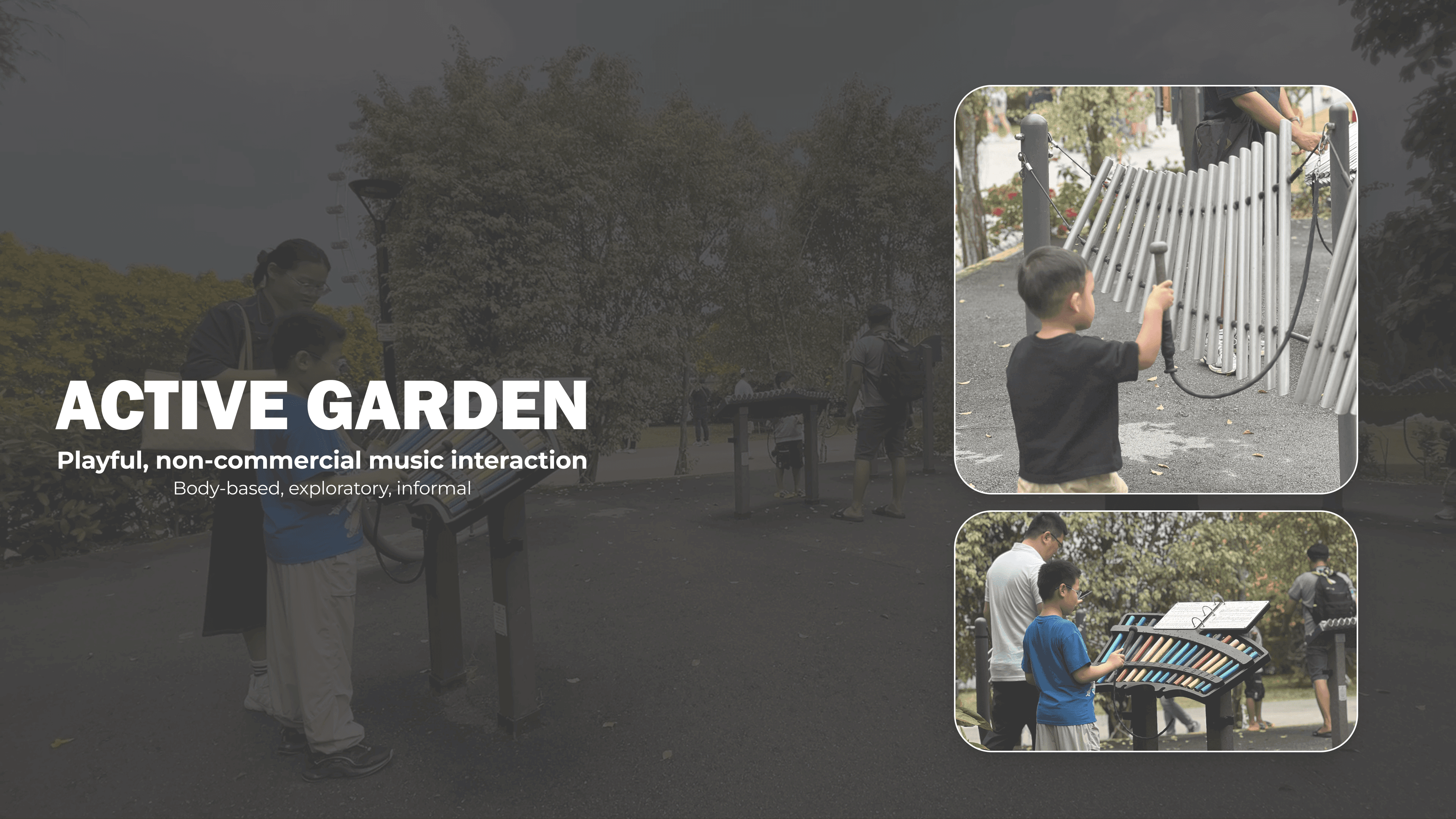

We began by visiting places where people first encounter music. From traditional music retail stores to lifestyle-focused experiences and public interactive installations, each environment revealed a different way of engaging with music. Across these visits, we identified three recurring modes of engagement: expression, discovery, and exploration, each offering valuable experiences, yet rarely existing together within a single journey.

Rather than treating expression, discovery, and exploration as separate experiences, we saw an opportunity to bring them together into a single journey. By combining the strengths of each environment, we could create a space that supports beginners from their very first interaction with music through to a growing sense of confidence.
Introducing Soundlab
Drawing from the qualities of expression, discovery, and exploration identified during our research, we designed SoundLab by deconstructing the guitar into three intuitive experiences. Through sound, touch, and interaction, visitors progress from curiosity to confidence, transforming the challenge of starting into an engaging and approachable journey.
Wall of Strings


Designed as the entry point to SoundLab, Wall of Strings allows visitors to create sound without any musical knowledge. Through touch-responsive strings that generate audio, light, and vibration, the installation lowers the barrier to participation and encourages playful exploration. Rather than teaching technique, the experience focuses on a simple goal: helping visitors feel comfortable enough to begin.
Tonal Exploration Space
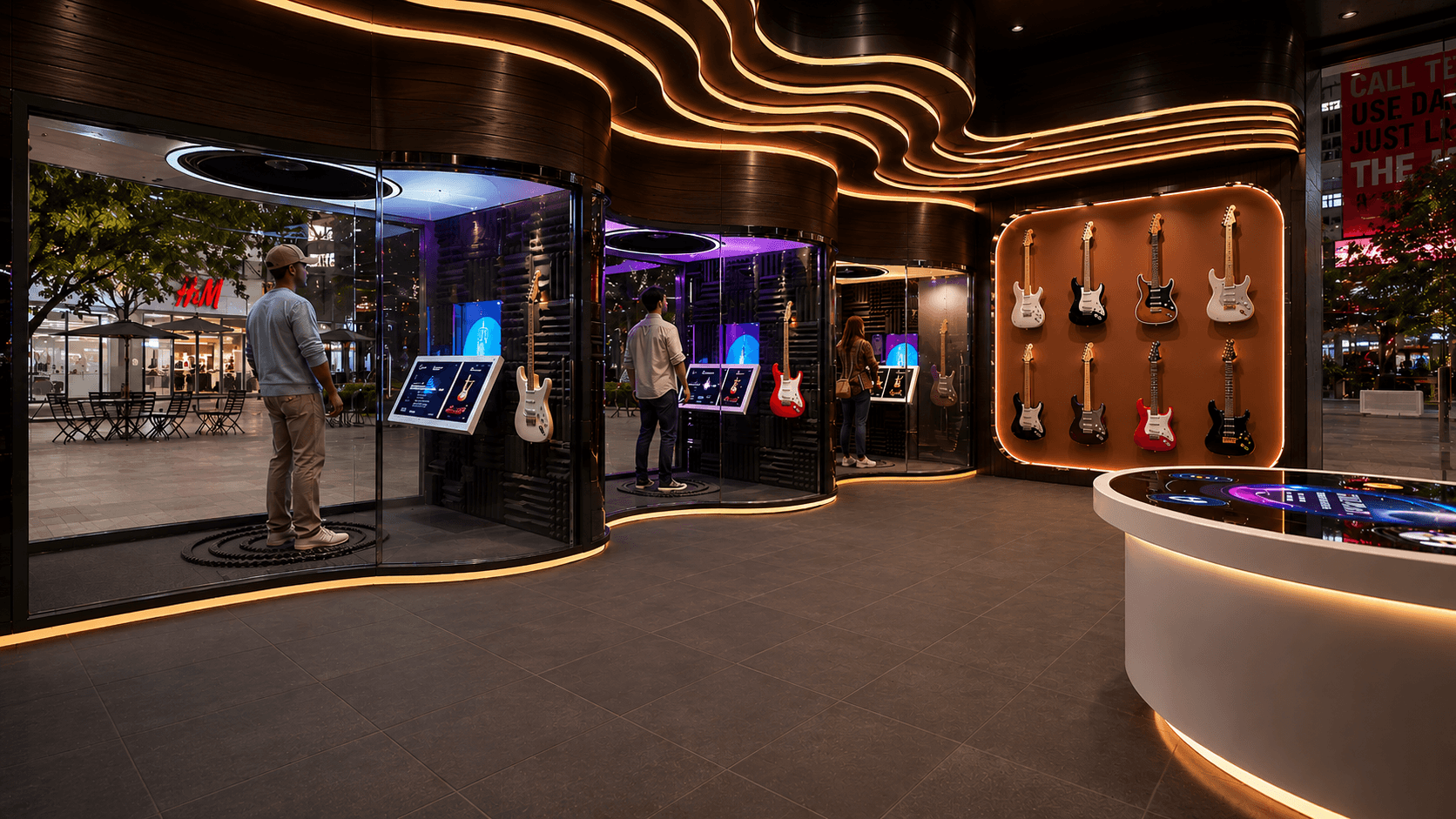
The second stage focuses on discovery. Inspired by the tonal versatility of the Squier Stratocaster, visitors explore how different pickup positions produce distinct sounds and feelings. Through immersive audio and vibrations embedded within the space, visitors not only hear the music but physically feel it beneath their feet. By transforming sound into a multi-sensory experience, the installation reveals the expressive possibilities hidden within a single instrument and turns curiosity into aspiration.
Expression Zone

The final stage focuses on confidence through expression. Before entering the space, visitors select a song or chord progression from a setlist, allowing them to tailor the experience to their interests and skill level. They then step onto an elevating platform inspired by the stage lifts commonly used in live concerts, gradually rising into the performance environment.
At the top, visitors are immersed within a curved panoramic display inspired by contemporary concert stages and virtual production environments. Surrounded by responsive crowd visuals, dynamic lighting, and real-time feedback, the space transforms practice into performance. Designed with a degree of privacy to reduce the fear of judgement, the experience allows beginners to experiment, learn simple chords, and build confidence at their own pace. As they progress, the environment responds to their playing, creating the sensation of stepping onto a stage and performing before a crowd.
Floorplan & Brand Manifesto


To evaluate SoundLab beyond visualisations, we developed a series of functional prototypes that brought each stage of the journey into a tangible experience.
For Wall of Strings, we constructed a physical installation using real guitar strings that visitors could pluck and vibrate to generate sound, demonstrating how music could be introduced through touch and interaction alone.
For the Tonal Exploration Space, we developed an interactive p5.js prototype that allowed visitors to compare the distinct sounds produced by the three pickup positions of a Stratocaster. Speakers were integrated to translate these tonal differences into both audible and tactile feedback, helping visitors experience how sound can be shaped and expressed.
For the Expression Zone, we built a machine-learning powered prototype capable of detecting guitar chords in real time. Visitors were guided with chord visualisations and encouraged to learn simple chord shapes, while responsive crowd reactions and performance visuals adapted to their playing. Even imperfect or unstructured playing was rewarded with positive feedback, reinforcing the project's goal of creating a supportive environment that builds confidence rather than judging skill.